
Vaccines
Vaccines Tailored to Your Pet and the Life You Share
Vaccines are one of the simplest, most effective ways to protect your pet from serious and preventable diseases. Here in Glastonbury, CT, where families are active outdoors, pets visit local parks, and wildlife exposure is common, staying up-to-date on vaccines is an important part of keeping dogs and cats safe and healthy.
At Glastonbury Veterinary Hospital, vaccines are never “one size fits all.” We look at your pet’s lifestyle, age, health history, and daily routines to build a plan that keeps them protected without ever giving more than they need. Our doctors take the time to sit with you, answer questions, and make sure you feel confident in every decision.
Why Vaccines Matter
Just like in people, vaccines help your pet’s immune system fight off infections before they cause illness. Many of the diseases we vaccinate against, such as rabies, parvovirus, distemper, and feline leukemia, can be life-threatening. Prevention is far safer, more comfortable, and more affordable than treating these conditions.
Vaccines are especially important in Connecticut because:
- Wildlife exposure is common (especially raccoons, skunks, foxes, and bats).
- Ticks and mosquitoes thrive in the Northeast, increasing parasite-borne disease risks.
- Local dog parks, boarding facilities, and grooming salons require certain vaccines for safety.
- Indoor cats can still be exposed, particularly to rabies or feline respiratory viruses.
Your pet’s safety is always our priority, and our vaccination recommendations reflect what truly protects them in our region.
Vaccines for Dogs
Core Vaccines for All Dogs
These protect against severe, widespread diseases seen throughout Connecticut:
- Rabies: Required by state law; protects pets and people.
- Distemper/Parvovirus (DHPP): Protects against deadly viral diseases, especially important for puppies.
Lifestyle-Based Vaccines
Recommended based on your dog’s activities, environment, and social interactions:
- Leptospirosis– Carried by wildlife and standing water throughout Glastonbury and Hartford County.
- Lyme Disease– Strongly recommended in Connecticut due to high tick exposure.
- Bordetella (Kennel Cough)– For dogs visiting boarding facilities, groomers, parks, or playgroups.
- Canine Influenza (CIV)– For social, traveling, or boarding dogs.
Puppy Vaccine Schedule
We typically begin vaccines at 6 to 8 weeks, with boosters every 3 to 4 weeks until your puppy is around 16 weeks old. This timing is crucial for strong immunity.
Vaccines for Cats
Indoor-only cats still benefit from protection, as wildlife exposure, travel, boarding, or unexpected escapes can put them at risk.
Core Vaccines for All Cats
- Rabies: Required in Connecticut for all cats, even indoors.
- FVRCP (Feline Viral Rhinotracheitis, Calicivirus, Panleukopenia): Protects against severe respiratory and gastrointestinal viruses.
Lifestyle-Based Vaccines
Feline Leukemia (FeLV)– Strongly recommended for kittens and any cat with outdoor access, exposure to other cats, or unpredictable contact with unknown cats (common in Glastonbury neighborhoods).
Kitten Vaccine Schedule
Kittens begin vaccines at 6 to 8 weeks, with boosters every 3 to 4 weeks until roughly 16 weeks, followed by adult vaccination schedules.
What to Expect During a Vaccine Visit
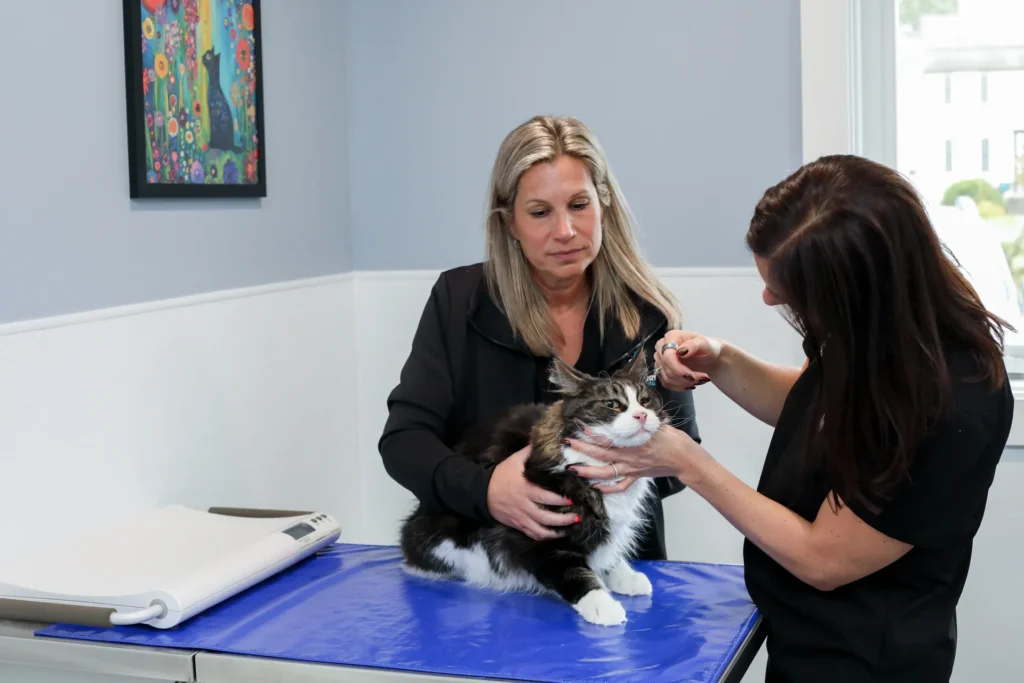
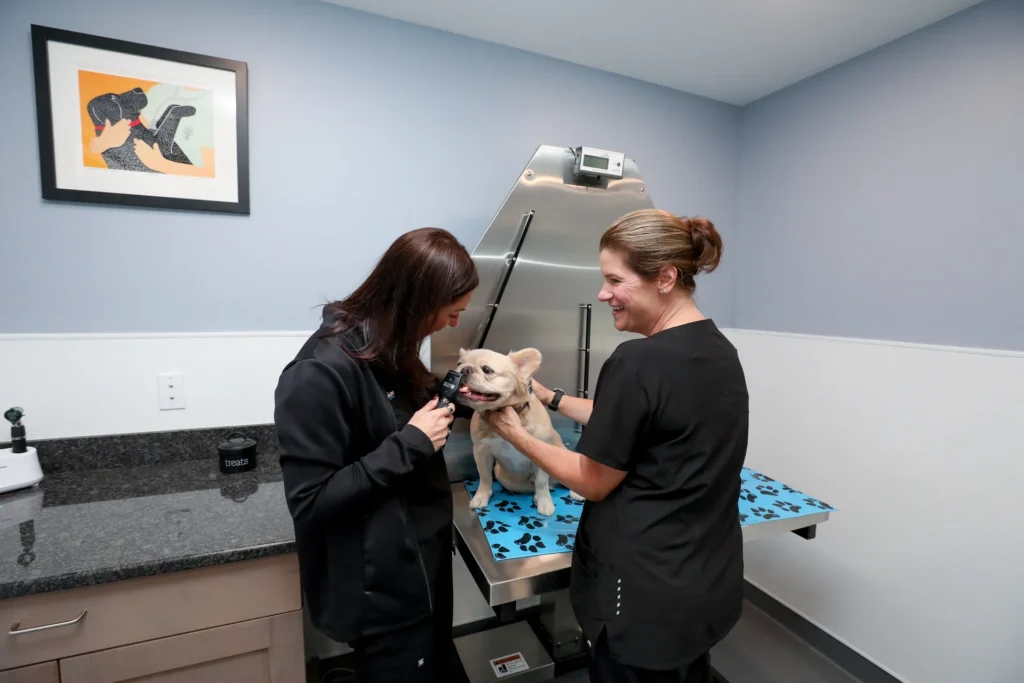
A vaccine appointment is more than a quick injection. It’s a chance for us to check in on your pet’s overall health and comfort.
During each visit, we:
- Perform a full nose-to-tail exam
- Review your pet’s lifestyle and exposure risks
- Tailor vaccine recommendations to avoid unnecessary vaccines
- Answer questions and discuss side effects
- Provide comfort-focused handling for a low-stress experience

Pet Vaccines in Glastonbury, CT: Your Questions Answered
Clear answers to the questions Glastonbury pet owners ask us most.
Which vaccines does my dog need?
Core dog vaccines include rabies and distemper-parvovirus combination vaccines. Depending on lifestyle, we may also recommend Lyme disease, leptospirosis, Bordetella, or canine influenza vaccines, which are especially relevant for dogs that hike, board, or visit groomers.
Do cats need vaccines every year?
Not every vaccine is given yearly. Core cat vaccines protect against panleukopenia, herpesvirus, calicivirus, and rabies, and many are boosted every one to three years after the initial series. We tailor the schedule to your cat. Indoor cats need protection too. Read why indoor cats need vaccines.
Is the rabies vaccine required in Connecticut?
Yes. Connecticut law requires dogs and cats to be vaccinated against rabies. We provide a rabies certificate you can use for town dog licensing in Glastonbury and surrounding towns.
Are pet vaccines safe?
Vaccines are very safe and protect against serious, preventable diseases. Mild tiredness or soreness for a day is common. The AVMA’s vaccination guide explains how vaccines work.
Can I get my puppy or kitten vaccinated with you?
Absolutely. See our puppy and kitten wellness page, or book a vaccine appointment online.
Your Pet, Protected With Care
Vaccines help your pet live a healthier, safer life. Whether you’re welcoming a new puppy or kitten, updating an adult pet’s protection, or caring for a senior companion, our team is here to help you make informed, confident choices.
If your pet is due for vaccines or if you’re unsure what they need, we’d love to help.